85,000 People Moved to Phoenix Last Year.
Every One of Them Needs Somewhere to Live.
That kind of demand is why Phoenix property has returned 170% over the last decade - 10.45% year after year, top 10% nationally.
There's no better market in America to build real wealth right now. But you're not the only one who's noticed.
Speed and access are what dictate returns in real estate. The investors making real money aren't outworking you - they're just seeing deals before the market picks them over.
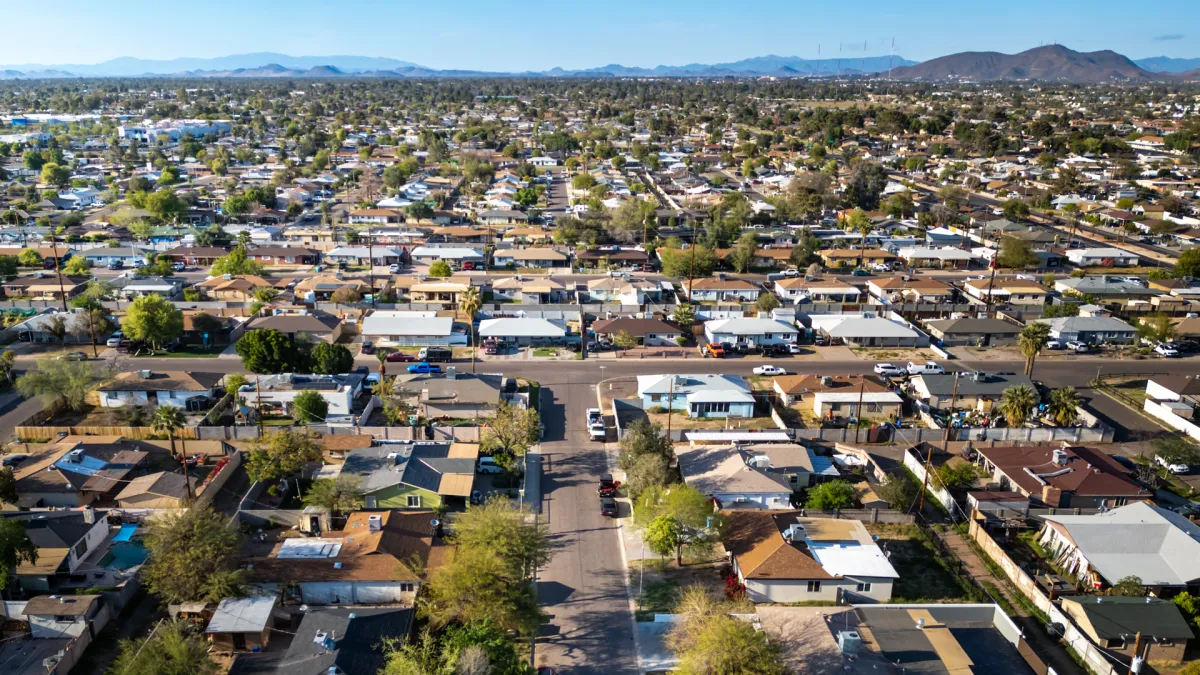
Here's what's happening in Phoenix:
📈 170% appreciation in 10 years. Phoenix real estate averaged 10.45% annual returns - top 10% nationally. This is a track record of capital performance.
🚚 The only major metro still growing. Of the ten largest US metros, only Phoenix maintained positive net migration in 2024. Florida, Texas, Georgia - all flatlined. Phoenix didn't.
💰 Wealthier buyers pouring in. Relocators arrive from metros with median household incomes of $73K–$98K - higher than Phoenix's own $72K median. They're not bargain hunting. They're deploying capital.
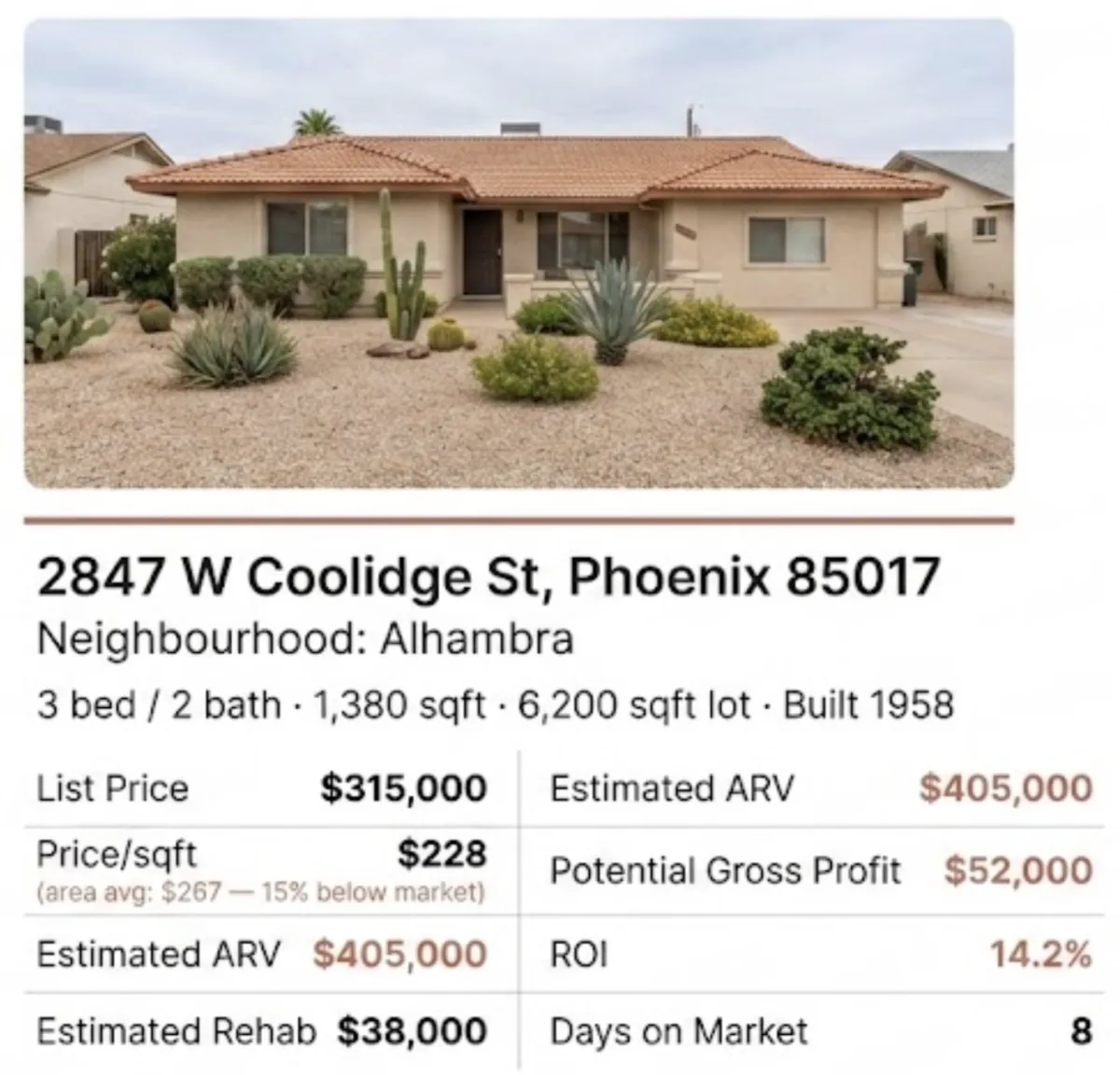
We scan thousands of listings weekly across MLS, Zillow, Redfin and other platforms. Filter to your buy box. Run the numbers. You get curated deals in your inbox before they're picked over.
→ Join Free. Get Your First Deal List This Week.
Example Deal Delivery & Analytics
Why Phoenix Returns Are Different
The Short Version
Most US real estate markets have stalled. High rates, low affordability, cautious buyers.
Transaction volume is down almost everywhere.
Phoenix keeps growing anyway.
Of the ten largest metros in America, Phoenix was the only one with positive net migration in 2024. The metro added 85,000 residents last year. California, Texas, Florida - the Sun Belt markets that boomed during COVID - have all flattened. Phoenix hasn't.
This matters because migration drives demand. Demand drives returns. And the returns here have been exceptional.
The Track Record
Phoenix real estate has appreciated 170% over the last decade. That's 10.45% per year, every year - enough to rank in the top 10% of US markets.
The national average over the same period? About 41%. Phoenix has outperformed by 4x.
This isn't a recent spike.
It's a ten-year trend backed by population growth, job creation, and sustained demand. The fundamentals held even when other hot markets corrected in 2023.
Where The Demand Comes From
630,000 Californians have moved to Arizona over the past decade - roughly 173 per day.
The LA to Phoenix corridor is now the busiest migration route between the two states.
These aren't people fleeing for cheaper rent. Incoming residents arrive from metros with median household incomes of $73K–$98K, compared to Phoenix's $72K. They're remote workers cashing out Bay Area equity. Retirees selling $1.2M homes and buying two rentals here. Investors redeploying capital into a market that actually returns.
This is why demand stays strong even as inventory grows.
The Job Engine
Phoenix added 33,500 jobs in 2024. Healthcare alone added 21,000. Unemployment sits at 3.1% - below the national average.
The employer base is diversified: Banner Health, Intel, Honeywell, American Express, plus TSMC building a semiconductor fab. No single-industry risk.
Over the past decade, Phoenix job growth exceeded 30%. Only three other large metros hit that mark: Austin, Orlando, and Raleigh.
Jobs create households. Households need housing. The chain is direct.
Rental Returns
High mortgage rates have kept renters renting longer. Good for landlords.
Gross rental yield in Phoenix city centre: 7.91%
Cap rates: 5.2% to 6.8% depending on property type
Average rent below the national average - meaning lower acquisition costs relative to income.
The strongest yields are in Class B and C properties in neighbourhoods like Maryvale, South Phoenix, and Laveen. Stable occupancy, improving demand, room for appreciation.
Flip Activity
Phoenix had a 10.7% flip rate in Q3 2024 - one of the highest among large metros. Average gross profit on a flip nationally runs around $70,000.
The deals exist. The margins work. The constraint is finding them before someone else does.
The Competition Problem
Active listings in Phoenix grew 39% last year.
More inventory should mean more opportunity.
It does - but the good deals still move fast.
Average days on market is around 65, but that's skewed by overpriced listings that sit.
Well-priced properties in good locations still get multiple offers and go under contract in weeks.
Institutional capital has noticed.
Phoenix delivered 4,460 new build-to-rent units in 2024 - a 309% increase since 2019. The big players are here.
You're not competing against other part-time investors. You're competing against funds with acquisitions teams and off-market pipelines.
The edge isn't working harder. It's seeing deals earlier.
→ Join Free. Get Your First Deal List This Week.